About
History
We are a collective still in the making. Interest in developing the EOLD-IRG started with the first International End-of-Life Doula Symposium in April 2022, led by Dr Marian Krawczyk. Symposium participants identified that the field of practice would benefit from opportunities to gather together, learn from, and collaborate within an inclusive international context. The desire for an ongoing international forum was also discussed in relation to developing a research base for the field. Consequently, we held another International Symposium in April 2023 where 40+ EOLD practitioners and researchers from six different countries gathered to begin identifying international research priorities. Our identification process is ongoing, and we anticipate a draft consensus document will be completed at the end of 2024.
People
Early Founders
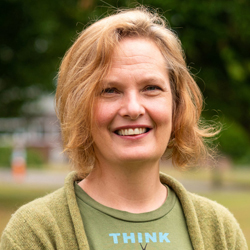
Dr. Marian Krawczyk is the founder of the EOLD-IRG. She is a medical anthropologist and Program Lead for the End of Life Studies MSc / PGCert / PGDip Program at the University of Glasgow. Marian is interested in a range of issues relevant to 21st century innovations in end-of-life care, including end-of-life doulas. Her research also encompasses innovative approaches to suffering at the end of life, the concept of total pain, and environmental grief.

Dr Emma Clare is a founding member of the EOLD-IRG. She is a Director and Chair of End-of-Life Doula UK and her PhD research focused on death competency development in healthcare professionals and end-of-life doulas. Her previous research explored how healthcare professionals’ own death anxiety can be a barrier to them providing high quality end of life care. Based in York UK, Emma describes herself as an activist and nature lover with a passion for bringing death and dying out of hospitals and back into compassionate communities wherever possible.

Jennifer Mallmes is a founding member of the EOLD-IRG. She has spent the last 20 years as a caregiver and an advocate for quality end-of-life care in Canada. She is a mother of 5 and resides in the Kootenay area of BC. Jennifer began her education in Nursing, however, she left that field to pursue a degree in Gerontology from Simon Fraser University where she focused her studies on equality, aging, and the end of life. Jennifer has worked in community home care where she found fulfilment in helping support people to remain at home nearing the end of life. Jennifer is the co-founder of the End of Life Doula Association of Canada, the creator and an instructor of the End of Life Doula program and Indigenous End of Lifer Guide program at Douglas College. Currently, Jennifer is completing a Master of Interdisciplinary Studies and Adult Education from Athabasca University. Jennifer’s passion for quality end-of-life care has inspired her to empower others to consciously live and die well.

Dr Annetta Mallon is a founding member of EOLD-IRG. Annetta is an End-of-Life consultant and educator, academic, social researcher, death literacy advocate, specialist grief, loss and trauma recovery psychotherapist, and professional mentor in Australia. A passionate consumer rights advocate, Annetta is committed to ensuring a social model of learning is modelled in her work, and that death literacy is raised in her communities. Her research includes the Mallon model for compassionate community networks for those who want to die at home and end of life doula work in four countries to raise awareness of priorities within the field. In her private practice Annetta offers secular end of life and after-death support services to both people and pets, and regularly holds talks and education events to promote death literacy and awareness of rights, options and choices at end of life.

Sarah Farr is a founding member of EOLD-IRG. She is from the UK but has spent the last twenty years of her life in Toronto, Canada. Her working life started in the field of public relations and event management. After the death of her father, she became very interested in end-of-life and trained as a Soul Midwife in the UK in 2015. In 2016, she joined Hospice Toronto and became an in-home volunteer and co-facilitated bereavement groups. In 2017, she joined the Kensington Hospice volunteer team as a resident and family care provider. With her wonderful chocolate Labrador “Holly” they are members of the St. John’s Ambulance Ontario Therapy Dog Team where they visit patients at end-of-life in numerous establishments. She is a Reiki practitioner and sits on the Board for the Cedarhurst Dementia Care home in Toronto and on the voluntary working advisory committees for the End-of-Life Doula Association of Canada. She is a Masters’ Student in the University of Glasgow End of Life Studies Program, and her dissertation research is about friend and family experiences of working with end-of-life doulas. She runs a private practice in end-of-life care with her business partner, Ruth Mackay called WISHSTONE.

Kelly Oberle is a founding member of EOLD-IRG. Kelly lives in Vancouver, Canada. She is also a Chartered Professional Accountant, an end-of-life doula, a certified Yoga instructor and bed-side volunteer at her local hospice. Kelly’s interest in end-of-life care began in 2007 when her sister was dying of breast cancer. She experienced, for the first time, the concept of facilitating a ‘good death’ through specialized end-of-life care. She was inspired by what she experienced and committed to learning all the ways she could support the dying and their families at end-of-life. Kelly’s current interests are Grief Yoga and the role of end-of-life doulas in the Medical Assistance in Dying (MAiD) program in Canada. She is a Masters’ Student in the University of Glasgow End of Life Studies Program, and her dissertation research is on family and friend experiences of individuals who choose MAiD in Canada.

Jennifer Rigal is a founding member of EOLD-IRG. Jennifer lives in Vancouver, Canada. She is a Masters’ Student in the University of Glasgow End of Life Studies Program and trained as an End-of-Life Doula at Douglas College in April 2020. Jennifer has spent most of her career as a technical recruiter (in the UK and Canada) and views her end-of-life studies as continuation of the guiding principle of treating and supporting people with dignity, compassion, and respect at all of life’s stages. Her current area of interest is death literacy specific to children and youth and more specifically within the Jewish community.
Affiliates
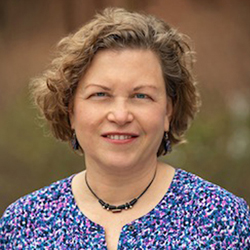
Merilynne Rush, owner of The Dying Year, is an international pioneer in end-of-life doula education and research. She holds an MS in Hospice and Palliative Studies and a BS in Nursing. Rush began her career as a homebirth midwife in 1980, was a hospice nurse, and since 2009 has been a natural death care educator, including home funeral, green burial, end-of-life doulas, and advance care planning. Rush co-founded and served as first president of the National End-of-life Doula Alliance (USA) and co-founded and served as vice-chair of the NHPCO End-of-life Doula Council. She also served on the boards of the National Home Funeral Alliance and the Green Burial Council. She is very active in social justice issues, examining implicit bias, health disparities, and cultural humility, and feels that doulas are needed in every community.
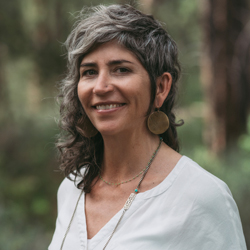
Elizabeth Johnson MA is co-founder and Executive Director of The Peaceful Presence Project. With a master’s degree in Community and Urban Planning, she has travelled the globe as an educator and facilitator, awakening her fascination with the cultural and social contexts that shape human understanding of the mysteries of life, aging, and death. She has trained as an end-of-life doula with the University of Vermont Larner School of Medicine, A Sacred Passing, and The Anamcara Project. She is a certified advance care planning educator for the Institute on Healthcare Directives. As a former member of the Board of Directors for the National End-of-Life Doula Alliance, she served on their Justice, Equity, Diversity and Inclusion Committee.
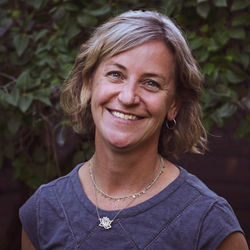
Erin Collins MN RN CHPN is co-founder and Program Director forThe Peaceful Presence Project. As a hospice nurse, she found that many of her patients arrived afraid of dying and largely unprepared for it, so chose to do something on the community level to ease this suffering. She trained as an end-of-life doula and completed the Being with Dying and G.R.A.C.E. programs at Upaya Zen Center. Erin is an ELNEC trainer and nursing educator and believes in education for the community at all levels, including individuals, families, students and clinicians in preparing for and talking about serious and terminal illness with compassion and tenderness. She serves as Vice-Chair of the NHPCO’s End-of-life Doula Advisory Council.
Principles
Why develop an international research agenda?
What is a ‘research agenda’? A research agenda is a resource that identifies research priorities, outlining a clear framework for prioritizing future research activities. While it is designed to guide decision-making about what kinds of research to focus on, it does not state what must be done but rather serves as a guiding framework that identifies the key areas of interest and the priorities for prospective future research endeavours. As research progresses and new insights emerge, the research agenda may evolve or be updated to reflect changing priorities and emerging challenges.
A resource document: A consensus-based international research agenda will be helpful to the diverse EOLD field of practice, both locally and globally. It will be able to function as an evidence-based resource of what practitioners themselves see as research priorities for the field as it continues to develop. In turn, the agenda can be used as a powerful tool to justify the need for further investment in research.
Global Perspective: An international research agenda allows for a broader and more diverse perspective through knowledge exchange. Different countries and regions have unique experiences, challenges, and solutions to community-led care in dying, death, and bereavement. At the same time, we know that there are significant similarities where we can learn from the diversity of cultural and contextual factors that shape end-of-life care, leading to more nuanced and context-sensitive findings.
Addressing Global Challenges: Many of the issues and challenges faced by EOLDs are not confined to specific countries or regions. Rather they have global implications. An international research agenda will facilitate knowledge-sharing and collaboration from different parts of the world, fostering a united effort to develop the field and address shared and pressing global challenges in community-led care in dying, death, and bereavement.
Sharing and Collaboration: We aim to bring together knowledge and research across national and international boundaries, and between academics, practitioners, community activists, health and social care representatives, government, and the public. In doing so we hope to promote cross-country and cross-context learning, foster a global network which supports a diversity of voices, develop innovative approaches and create diverse collaborations to research.
Resource Allocation: An international research agenda will help identify core areas where resources and efforts can best be focused. We know that access to social, cultural, and economic capital is difficult in developing successful research projects, particularly for those who face structural inequalities. We believe that an international research agenda can facilitate social justice whereby we work together to ensure fair and equitable division of resources, opportunities, and privileges in accessing research opportunities – in funding, in participation, and in what are seen as important topics to research.
Policy Development: Policymaking increasingly requires data from diverse contexts to make informed decisions. An international research agenda can provide robust findings to inform policy development and implementation at both national and international levels.
Our Guiding Principles
Sea chart rather than roadmap: To best develop an international, consensus-based research agenda, we have chosen to use the metaphor of a sea chart rather than a road map to describe both our processes and desired outcomes. A road map implies a specific destination, with deterministic conceptualisations of planning and benchmarks, and rigid linearity. However, we believe that the times we find ourselves in does not suit this type of framing of the best approach to supporting innovations in end-of-life care. We are grappling with unpredictable pandemics, environmental catastrophes, political polarization, radical retrenchment of state-sponsored care, accelerating economic disparities, and armed conflicts, to name but a few contemporary challenges. A sea chart metaphor encourages exploration of different paths and ways of navigating changing terrains, thereby enabling researchers to be more open to unexpected and innovative pathways for the field of EOLD practice within conditions of volatility, uncertainty, complexity, and ambiguity. Therefore, while the research that EOLD-IRG supports may be useful to those who wish to develop national or international standards/scope of practice, the direct development of these kinds of frameworks are outside of our core research goals.
Naming practice: Some practitioners do not identify (or solely identify) with the descriptor ‘End-of-Life Doula’. There are a wide range of terms, such as death doula, death midwife, end of life guide, as well as others, that are used to describe individuals who specialize (with or without previous or formal training) in providing services, support, and care focused on decline, dying, and death within a variety of care settings, either for payment or volunteered, who are not licensed or regulated by a centrally accredited professional body. We support this diversity. However, we have chosen to use the end-of-life doula terminology as it is the most common identifier within international contexts to encapsulate the kind of care and role described above, namely, a person who provides nonmedical support – social, emotional, practical, and spiritual – for people nearing the end of life, and those close to them.
Collective rather than an organization: We have consciously chosen to describe ourselves as a ‘group’ or ‘collective’ rather than an organization. We do not have a board of directors, membership requirements, or other conventional organizational hierarchies. We want to model and promote an inclusive and participatory approach to developing research priorities. We believe this democratic structure can lead to more diverse perspectives, innovative ideas, and shared accountability, creating a stronger sense of community and cohesion, while also giving voice to the wide range of values and interests of those who may be drawn to this research group. In prioritizing collaboration and consensus-building, collectives (ideally) align with social justice principles for addressing systemic inequalities and promoting a more just and fair society. We believe that to meaningfully address the systematic challenges shaping contemporary dying, death, and bereavement, these principles are required.